
Child development for beginners starts with one simple truth: every child grows at their own pace. Parents often feel overwhelmed by the flood of information about milestones, stages, and what their child “should” be doing by a certain age. This guide breaks down the fundamentals into clear, practical insights.
Understanding how children develop helps parents respond to their needs with confidence. From physical growth to emotional awareness, children change rapidly in their first years of life. This article covers the five key areas of development, explains what milestones mean, and offers actionable ways to support growth at every stage.
Table of Contents
ToggleKey Takeaways
- Child development for beginners centers on understanding that every child grows at their own pace, not according to rigid timelines.
- The five key areas of child development—physical, cognitive, language, social, and emotional—are interconnected and influence each other constantly.
- Brain development happens fastest from birth to age three, making early positive experiences like responsive caregiving and conversation critical.
- Developmental milestones are averages, not deadlines, but consistently missed milestones warrant a conversation with your pediatrician.
- Simple daily habits like talking, reading, and responsive parenting support healthy child development more than any specialized program.
- Limiting screen time and prioritizing unstructured play gives children essential opportunities to learn, problem-solve, and grow.
What Is Child Development?
Child development refers to the biological, psychological, and emotional changes that occur in children from birth through adolescence. These changes follow a predictable sequence, though the timing varies from child to child.
Development happens across multiple domains at once. A toddler learning to walk is also building brain connections, understanding language, and forming attachments to caregivers. These processes don’t happen in isolation, they influence each other constantly.
Researchers study child development to understand how children learn, think, and interact with the world. Parents can use this knowledge to create environments that encourage healthy growth. Child development isn’t about pushing children to reach milestones faster. It’s about understanding what children need at each stage so parents can provide appropriate support.
The early years matter most. Brain development happens faster between birth and age three than at any other time in life. During this period, children form neural connections at a rate of over one million per second. Positive experiences, like responsive caregiving, play, and conversation, shape these connections and lay the foundation for future learning.
The Five Key Areas of Development
Child development spans five interconnected areas. Each area influences the others, creating a web of growth that shapes who a child becomes.
Physical Development
Physical development includes both gross motor skills and fine motor skills. Gross motor skills involve large muscle movements like crawling, walking, running, and jumping. Fine motor skills involve smaller movements like grasping objects, drawing, and buttoning shirts.
Infants typically gain control of their heads before they can sit. They sit before they crawl. They crawl before they walk. This sequence follows a pattern from head to toe and from the center of the body outward.
Nutrition, sleep, and physical activity all affect physical development. Children need adequate protein for muscle growth, calcium for bones, and iron for brain development. Regular active play strengthens muscles and improves coordination.
Cognitive and Language Development
Cognitive development refers to how children think, learn, and solve problems. Language development, the ability to understand and use words, connects closely to cognitive growth.
Babies are born ready to learn language. They prefer human voices to other sounds and can distinguish their mother’s voice within days of birth. By six months, most infants babble. By twelve months, many say their first words. Vocabulary explodes between ages two and three.
Child development experts emphasize the importance of talking to children from birth. Narrating daily activities, reading books, and responding to babbles all build language skills. Children who hear more words in early childhood typically have larger vocabularies later.
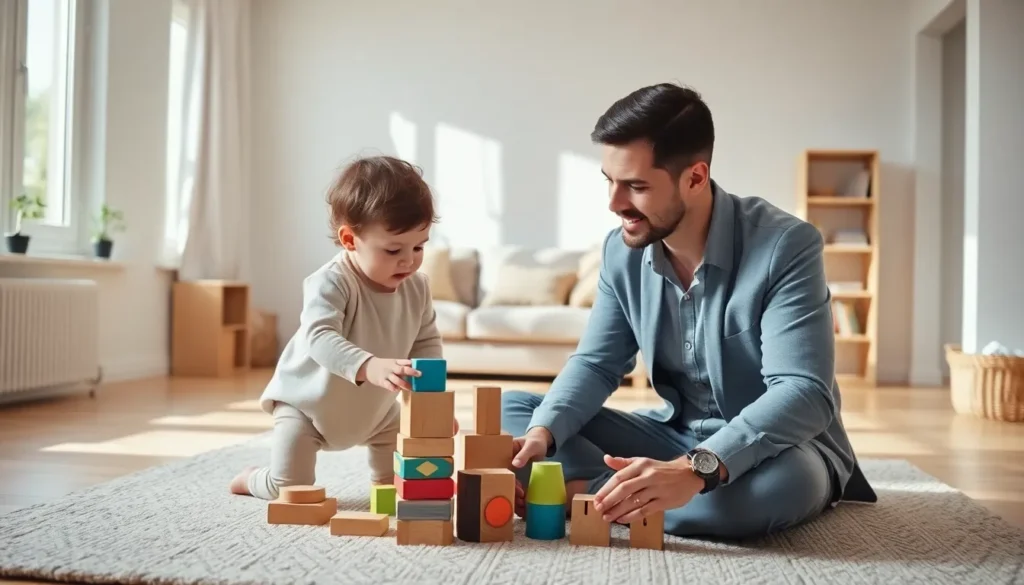
Cognitive development also includes memory, attention, and reasoning. Play serves as the primary way young children learn about their world. Stacking blocks teaches cause and effect. Hide-and-seek games teach object permanence, the understanding that things exist even when hidden.
Social and Emotional Development
Social development involves learning to interact with others. Emotional development involves understanding and managing feelings. These areas intertwine throughout childhood.
Infants form attachments to primary caregivers in the first year of life. Secure attachment, built through consistent, responsive care, gives children confidence to explore. Children with secure attachments tend to develop better social skills and emotional regulation.
Toddlers begin to understand emotions in themselves and others. They may comfort a crying friend or express anger when frustrated. Preschoolers learn to share, take turns, and cooperate in play. School-age children develop friendships and navigate group dynamics.
Parents support social and emotional development by modeling healthy emotional expression, validating children’s feelings, and teaching problem-solving skills.
Understanding Developmental Milestones
Developmental milestones are behaviors or skills that most children demonstrate by a certain age. Pediatricians use milestones to track development and identify potential concerns early.
Common milestones include:
- 2 months: Smiles at people, coos, follows objects with eyes
- 6 months: Rolls over, babbles, responds to own name
- 12 months: Pulls to stand, says one or two words, waves bye-bye
- 2 years: Runs, speaks in two-word phrases, begins pretend play
- 3 years: Climbs well, speaks in sentences, plays with other children
Milestones represent averages, not deadlines. Some children walk at nine months: others wait until fifteen months. Both can be perfectly normal. Wide variation exists within typical development.
That said, significantly delayed milestones can signal developmental differences that benefit from early intervention. Parents who notice their child consistently missing milestones should consult a pediatrician. Early support often leads to better outcomes.
Child development screening happens at regular well-child visits. Parents should share observations and concerns with healthcare providers. They know their children best and often notice delays before professionals do.
How to Support Your Child’s Growth
Parents don’t need special training to support child development. Simple, consistent practices make a significant difference.
Talk and read daily. Conversation builds language skills and strengthens relationships. Reading exposes children to vocabulary and concepts they wouldn’t encounter otherwise. Even infants benefit from hearing stories.
Provide time for play. Play is children’s work. Through play, they develop physical skills, learn problem-solving, practice social interactions, and process emotions. Unstructured play matters as much as organized activities.
Respond to your child. Responsive parenting, noticing and appropriately reacting to a child’s cues, builds secure attachment. When parents respond to cries, answer questions, and show interest in a child’s activities, they communicate that the child matters.
Create a safe environment. Children need physical safety to explore freely. They also need emotional safety, an environment where they can make mistakes, express feelings, and know they’re loved regardless of behavior.
Limit screen time. The American Academy of Pediatrics recommends avoiding screen time for children under 18 months (except video chatting) and limiting it to one hour daily for children ages two to five. Active play and human interaction support child development better than screens.
Take care of yourself. Parental wellbeing affects child development. Stressed, exhausted parents struggle to provide patient, responsive care. Self-care isn’t selfish, it’s foundational to good parenting.